Pasture dieback is a serious and increasingly widespread condition affecting summer-growing pasture grasses across eastern Australia. First reported in northern Queensland, the issue has rapidly expanded and now impacts grazing systems from Far North Queensland through to the North Coast of New South Wales. As pasture dieback continues to spread, it presents significant challenges for livestock producers, reducing pasture productivity, increasing weed invasion, and threatening long-term farm profitability.
This article explains what pasture dieback is, the grasses most affected, how to recognise early symptoms, the conditions that increase or reduce severity, and the management strategies producers can use to limit damage and support pasture recovery.
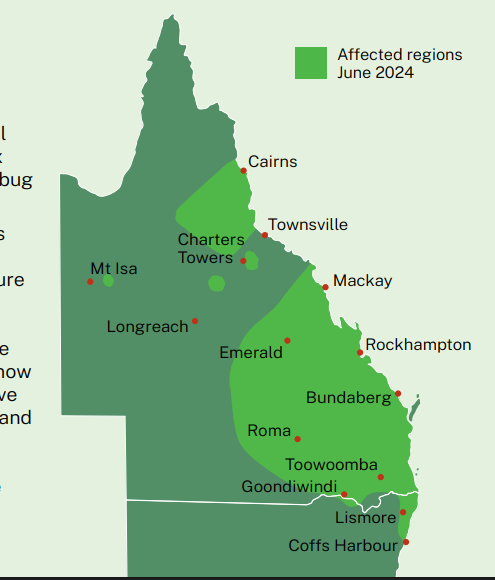
What Is Pasture Dieback?
Pasture dieback is a complex pasture disorder that primarily affects summer-growing C4 grasses, also known as tropical or subtropical grasses. The condition results in declining pasture health, patchy grass death, and eventual loss of ground cover.
Research has identified a strong association between pasture dieback and the pasture mealybug (Heliococcus summervillei), a sap-feeding insect that damages plant tissue and interferes with nutrient uptake. While pasture dieback is not caused by a single factor, the interaction between susceptible grasses, insect pressure, and environmental conditions plays a critical role in its development.
Pasture dieback typically begins in small patches that expand over time. Without intervention, these patches can merge and spread across entire paddocks, significantly reducing carrying capacity and increasing reliance on supplementary feeding.
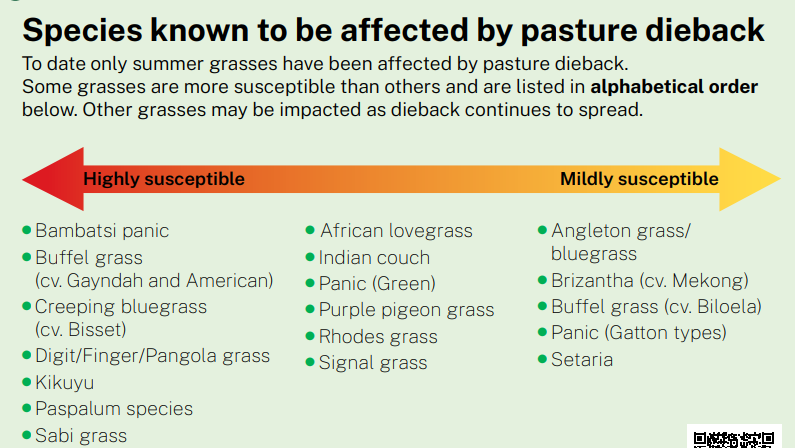
For pasture dieback to occur it requires only two factors to be present. Those factors are the present pasture grass is a C4 grass and the presence of pasture mealybug.
Increased prevelance and susceptibility generally occur under the following conditions:
High grass biomass, highly susceptible grass and hot and humid conditions.
Decreases prevalence and severity generlly occurs under the following conditions:
Low grass biomass, less susceptible grass, Cool or dry conditions, Grass is not actively growing, Predatory insects present, Legumes present. Regular soil testing in Queensland can assist in monitoring pasture health and identifying contributing environmental factors.
Pasture dieback guide NSW DPI:
https://www.dpi.nsw.gov.au/__data/assets/pdf_file/0009/1333692/PastureDiebackGuide2ndED.pdf