
Why soil testing matters
Why soil testing matters: every fertiliser decision starts here.
Every fertiliser call you make, rate, product, timing, placement, comes back to what the soil is actually carrying. A soil test turns the guesswork into a paddock-specific number. Dawson Ag growers use soil data to plan nitrogen, target phosphorus, correct pH, and keep sodicity and salinity in check before they bite into yield.
Three things a good soil test gives you:
- Fertiliser efficiency. Put nitrogen and phosphorus where the paddock actually needs it. Stop over-feeding paddocks that do not need it and starving paddocks that do.
- Smarter rotations. Plan the next two or three crops against the soil carrying capacity, not against last year’s prices.
- Long-term soil health. Track pH, organic carbon and sodicity over years so the paddock still performs a decade from now.
Why independent
Independent sampling, independent interpretation.
Most soil testing in Southern Queensland comes tied to a reseller, a lab, or a product line. Dawson Ag is independent on both sides: no reseller quotas, no product commissions, no lab ownership.
That means the test design, the tier you get quoted, the interpretation you read, and the fertiliser plan that flows out of it are calls made against your paddock and your yield target, not against a sales pipeline. Growers who want a second opinion on a reseller-supplied plan often start here.
Looking for ongoing support beyond the test? See how independent soil testing fits into our agronomy service.
Choose your level
Three tiers: Standard, Zonal and EM.
Match the tier to the decision. A paddock you want a baseline read on suits a Standard test. A paddock you plan to run variable-rate on needs Zonal or EM data.
Standard Soil Test
Paddock-level soil test with five bulked cores, core nutrient analysis and independent interpretation. Suited to growers testing a paddock or two at a time.
Zonal Soil Testing
Zone-based sampling using NDVI or EM data, with composited cores per zone and up to four depth layers. Builds a variable-rate-ready nutrition picture across paddock variability.
EM Surveying
Full-paddock electromagnetic survey that maps soil variability, creates zones, and tests up to four depth layers. Output layers feed variable-rate prescriptions for precision programs.
How it works
Mobile on-farm sampling, GPS-stamped cores.
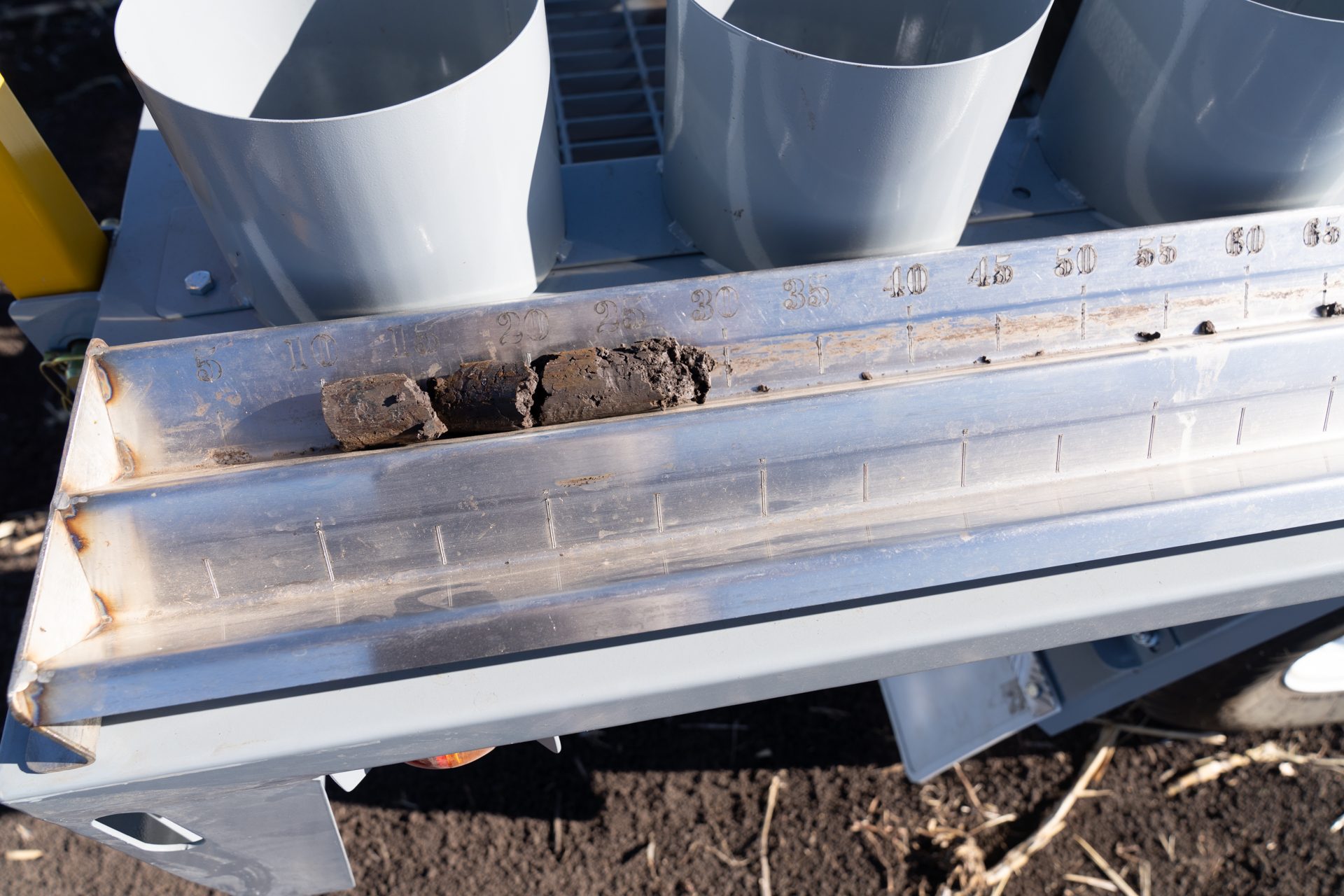
Mobile soil coring across the Lockyer Valley, Toowoomba, Western Downs, South Burnett and Goondiwindi. Our sampling rig comes to the paddock; cores are GPS-stamped and sent direct to an independent lab.
- Book the test. Call or use the contact form. We confirm paddock boundaries, tier, and whether zonal or EM layers are needed.
- On-farm sampling. We bring the mobile sampling trailer to the paddock. Cores are pulled on a GPS-stamped pattern appropriate to the tier.
- Lab analysis. Cores are dispatched to an independent lab. Standard tests return a core nutrient panel; Zonal and EM tests return multi-layer panels.
- Interpretation and plan. You receive a report with your numbers alongside a fertiliser and rotation call against your yield target. Delivery is usually 7-10 days.
What shows up
What your soil test picks up.
A Dawson Ag soil test is built to surface the issues that change your fertiliser bill, your rotation, or your long-term paddock viability. In order of how often we see them:
- Nitrogen availability. How much nitrogen is actually sitting in the profile, at what depth, and what you need to add to hit the yield target.
- Phosphorus deficiency. Whether the paddock is carrying enough phosphorus for the planned crop, or whether a starter application is required.
- pH. Acidity or alkalinity by depth. Sub-surface acidity quietly caps wheat, barley and chickpea yields across the Downs.
- Sodicity. Exchangeable sodium percentage (ESP). Above 6% at 0-10 or 10-30 cm triggers a gypsum call, rate and timing depend on depth distribution.
- Salinity. Electrical conductivity, especially relevant in irrigated paddocks and low-lying country.
- Organic carbon. A slow-moving number that tells you whether the paddock is gaining or losing ground year on year.
- Structure and texture. Physical soil attributes that change how water moves and how roots get to depth.
Live example
Move the yield target. Watch the plan change.
Same paddock, same soil test result. As the yield target shifts, the nitrogen recommendation moves with it. This is the calculation that sits behind every Dawson Ag fertiliser plan.
- Nitrogen required
- 137 kg N/ha
- Soil nitrogen (sampled)
- 60 kg N/ha
- Mineralisation
- 20 kg N/ha
- Total available
- 80 kg N/ha
Wheat at 13% protein. Soil nitrogen and mineralisation values illustrative only — your numbers come from your test, your paddock, your yield target.
What you receive
Report, interpretation, recommendations.
Three things land in your inbox when the lab results come back:
- Customised PDF report per paddock sampled. GPS-stamped sampling pattern, lab-tested nutrient and physical soil data, depth-layer breakdown.
- Independent interpretation. Not a lab-auto-generated sheet. A written call on what the numbers mean for your paddock, written against your yield target.
- Fertiliser and rotation recommendations. Nutritional planning, recommendations against your yield targets, variable rate application maps where the tier supports it, and a seasonal rotation call for the next crop.
Want to see what the deliverables look like? Download a sample lab report or download a sample recommendations pack.
Precision capability
Zonal mapping, NDVI zones, EM38, GPS.
Where the paddock and the budget call for it, we layer precision capability on top of a standard soil test.
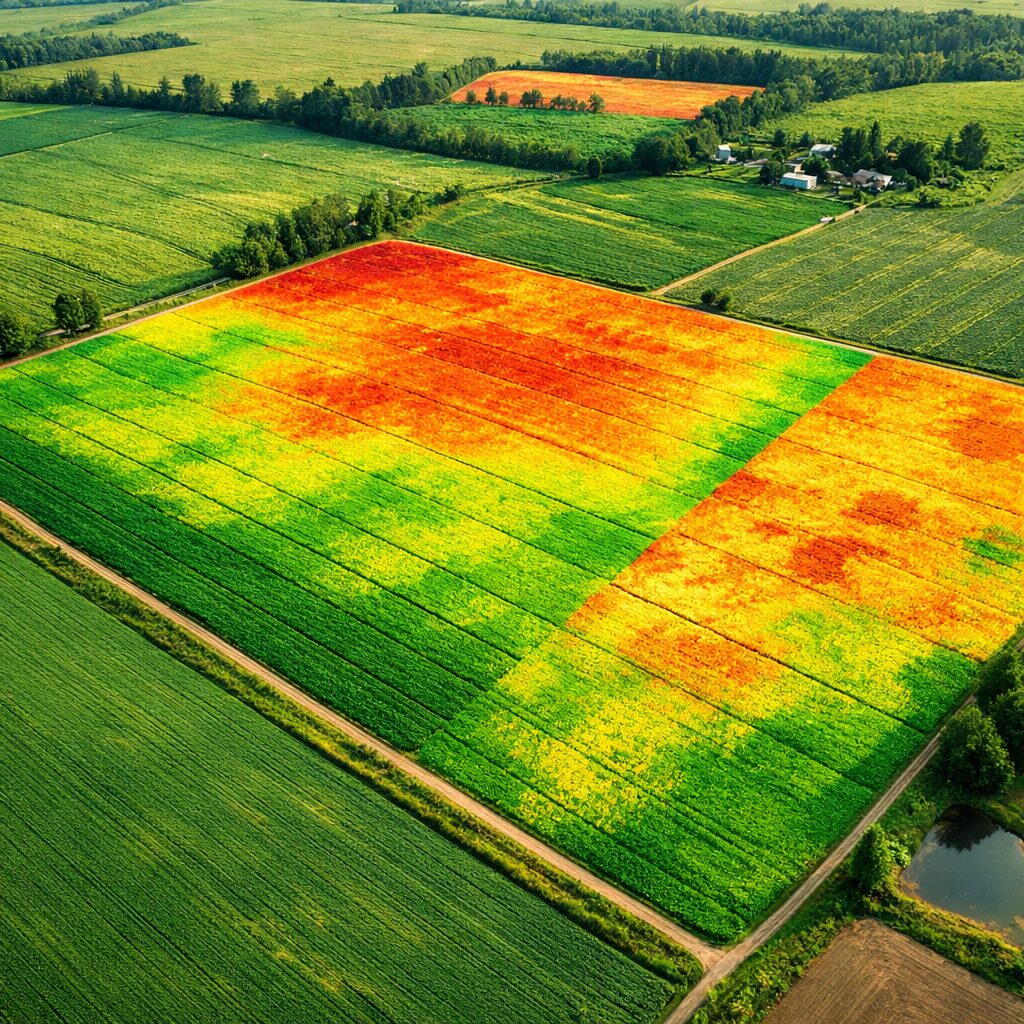
- Zonal mapping. Zones derived from yield, NDVI, EM, or a combination. Cores are composited by zone so variable-rate recommendations have real data behind them.
- NDVI zone analysis. Multi-year satellite imagery used to surface persistent production zones. Cheaper and faster than EM when it is the right tool for the paddock.
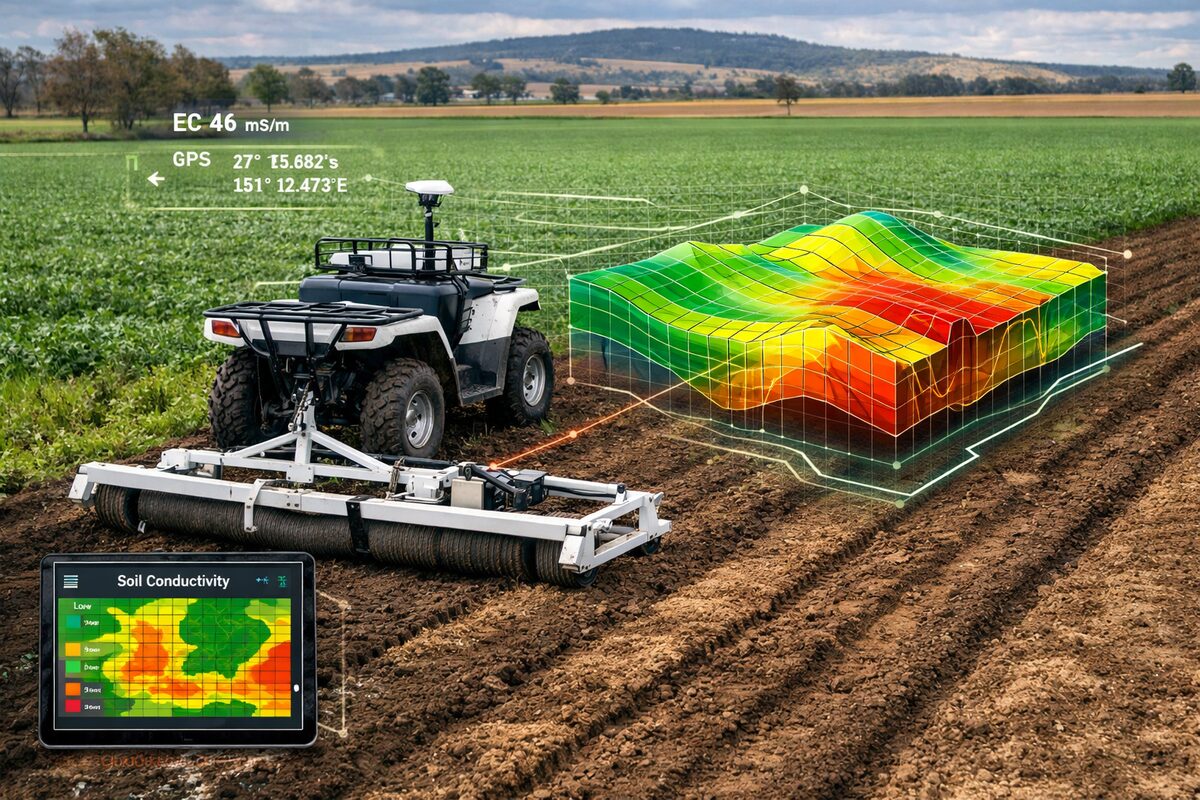
- EM38 survey. Full-paddock electromagnetic survey for paddocks going into a precision program. Returns a soil-variability layer independent of any one year’s rainfall.
- GPS-stamped sampling. Every core is logged to a GPS point. Next year’s test goes back to the same ground so your trend lines are real, not noise.
The precision capability sits behind the GRDC / SPAA variable-rate contract that Dawson Ag runs alongside the soil testing service.
Who you work with
Meet your agronomist.
Dawson Ag is a small team of independent agronomists based in Southern Queensland. Jeremy Dawson holds a Bachelor of Rural Science and a Certificate in Rural Science (Cotton Production) from UNE, and leads the GRDC / SPAA variable-rate contract the business runs in parallel with the on-farm soil testing service.
You will see the same faces at the paddock gate from book-in through interpretation. No call centre, no handoffs.
Coverage
Southern Queensland and Northern NSW.
Mobile soil coring across the Lockyer Valley, Toowoomba, Western Downs, South Burnett and Goondiwindi, and into Northern NSW.
Our service area covers the broadacre cropping country from the Lockyer Valley west to Goondiwindi and south into Northern NSW. If you are outside the core Southern Queensland patch, call or email and we will let you know whether the trip is workable.
FAQ
Common questions.
Do I need to be an agronomy client to use this service?
No. This service is available to both Dawson Ag clients and one-off customers.
How long do results take?
You’ll receive your report within 7-10 days in most cases.
What areas do you cover?
We operate throughout Southern Queensland and Northern NSW.
Can I get help interpreting the results?
Yes. Interpretation is included for agronomy clients and available for others on request.
Book a soil test
Fill in the form below and we’ll be in touch within one business day.