Beyond profitability
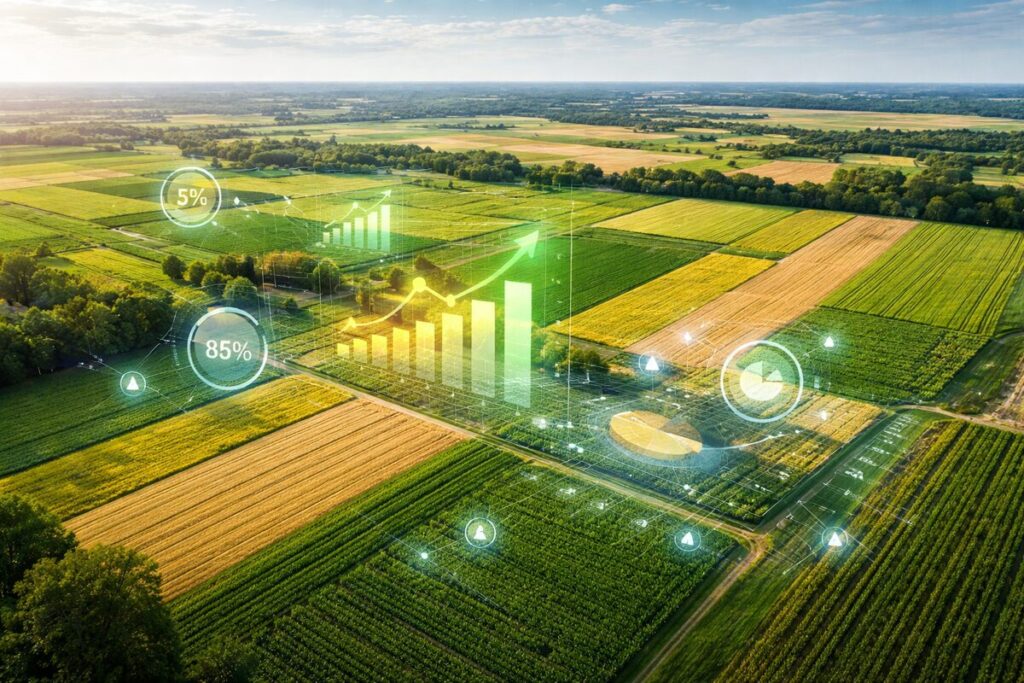
Precision agriculture is often promoted for its economic advantages, but its environmental benefits are equally compelling. By matching inputs to actual plant and soil needs, farmers can grow more food with fewer resources, reducing pollution and preserving soil health. A 2021 study for the Association of Equipment Manufacturers quantified how precision technologies improve efficiency across several fronts[1].
Quantifying the environmental gains
The AEM study found that farmers consistently using precision agriculture technologies achieved a 4% increase in crop production while using resources more efficiently[1]. Fertiliser placement efficiency increased by 7%, herbicide and pesticide use fell 9%, fossil fuel use declined 6%, and water use dropped 4%[1]. These small percentages translate into big environmental impacts: improved efficiency avoided 2 million acres of cropland, saved 30 million pounds of herbicide, conserved 100 million gallons of fossil fuel, and saved enough water to fill 750,000 Olympic-size swimming pools[1].
The study also highlighted room for further improvement. With broader adoption, productivity could increase by another 6%, and fertiliser efficiency could rise an additional 14%[2]. AEM’s Curt Blades emphasised that precision agriculture enables the “four R” principles – applying the right source at the right rate, at the right time and in the right place[2]. This not only saves money but reduces the risk of nutrient runoff and greenhouse-gas emissions associated with nitrogen fertiliser production.
Soil testing: preventing pollution and waste
Soil testing is a cornerstone of precision agriculture. Farm Progress points out that combining soil sampling with tailored recommendations helps reduce nitrate pollution in surface and groundwater[3]. In an era of high input costs and tight margins, the same article notes that efficient fertiliser use is critical for farm profitability[4]. Regular soil tests prevent over-application and prevent unused nitrogen from leaching into waterways, protecting aquatic ecosystems.
Deep soil testing further amplifies these benefits. The Re Soil Foundation summarises research showing that sampling deeper than 6 inches (down to 6-24 inches) before planting can save $13-$189 per acre by taking advantage of residual nitrogen[5]. Beyond the economic savings, reducing nitrogen use helps protect water quality; excessive nitrogen can contaminate waterways and cause eutrophication[6].
NDVI, EM and variable rate: minimising runoff
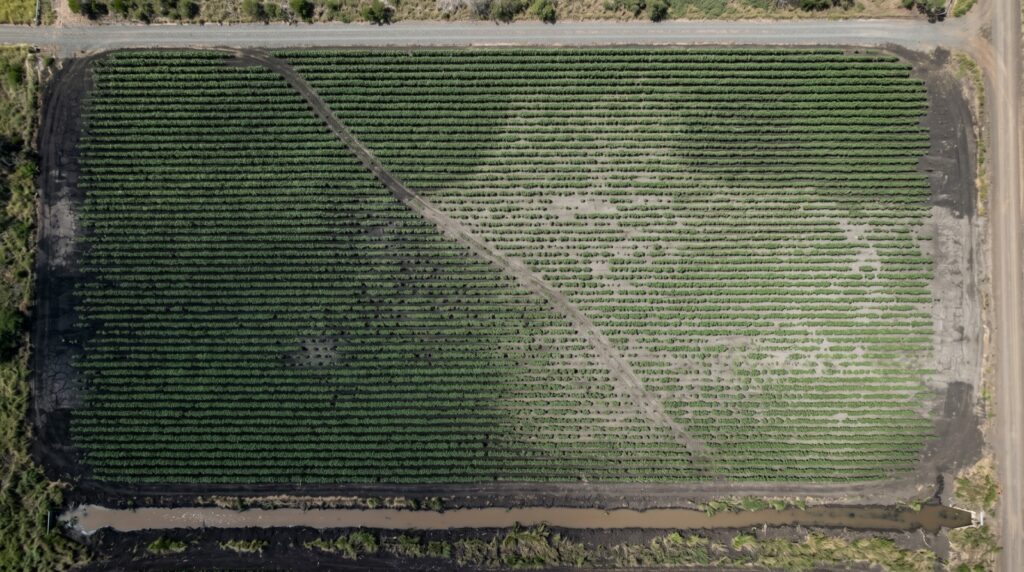
Remote sensing and proximal soil mapping are powerful tools for environmental stewardship. NDVI imagery highlights areas of crop stress, enabling farmers to intervene early and avoid over-applying fertiliser[7][8]. EM surveys map soil texture, moisture and salinity, allowing growers to identify sandy or compacted areas where fertiliser might leach or runoff[9]. By integrating these datasets into variable-rate application systems, farmers can apply nutrients precisely where they will be used, reducing the risk of runoff into streams and rivers.
A more sustainable future
Precision agriculture demonstrates that sustainability and productivity are not mutually exclusive. Quantifiable reductions in fertiliser, chemical and water use[1], combined with targeted soil and crop monitoring[10][9], mean farmers can grow more food while protecting the environment. As fertiliser prices remain high and communities demand cleaner water and healthier soils, adopting precision technologies is not just a smart business decision – it’s a commitment to stewardship.
References
- [1] [2] The Environmental Benefits of Precision Agriculture Quantified – AEM | Association of Equipment Manufacturers https://www.aem.org/news/the-environmental-benefits-of-precision-agriculture-quantified
- [3] [4] Soil testing benefits farm profits and environmental protection https://www.farmprogress.com/soil-health/soil-testing-key-to-farm-profitability-and-environmental-stewardship
- [5] [6] Deep soil testing reduces fertilizer spending https://resoilfoundation.org/en/agricultural-industry/soil-testing-reduces-fertilizer-spending/
- [7] [8] [10] Unlocking the Power of Precision Agriculture: Crop Health Monitoring, NDVI, and Variable Rate Applications https://www.fieldbee.com/blog/unlocking-the-power-of-precision-agriculture-crop-health-monitoring-ndvi-and-variable-rate-applications
- [9] Using ground-based EM and radiometrics to map soil amelioration | GroundCover https://groundcover.grdc.com.au/agronomy/soil-and-nutrition/using-ground-based-em-and-radiometrics-to-map-soil-amelioration