Why integration matters
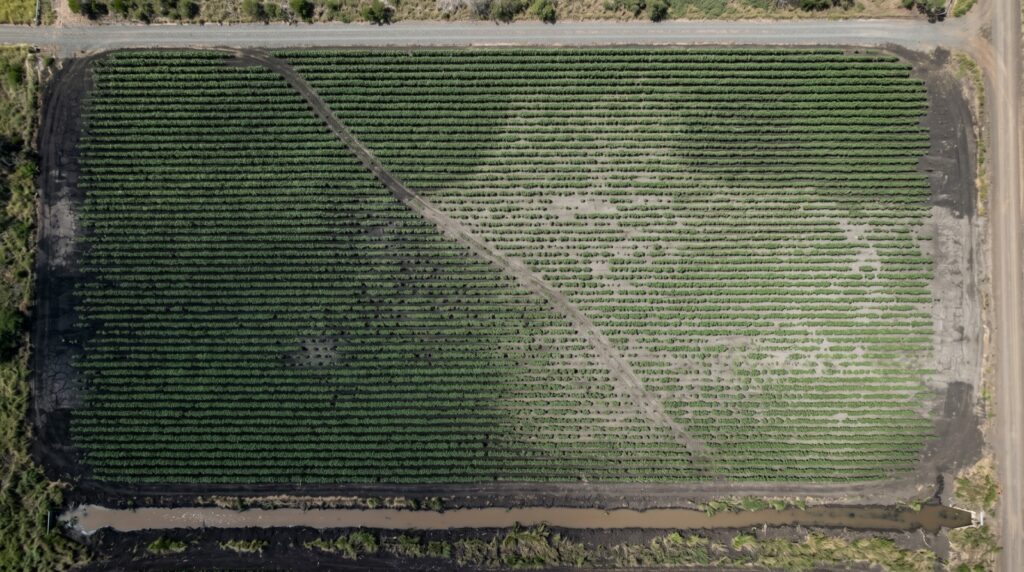
Modern farming generates a wealth of data – from satellite imagery and proximal sensors to lab reports. The challenge is turning these disparate datasets into actionable insights. When fertiliser prices are high and climate conditions unpredictable, integrating soil test results with NDVI imagery and EM surveys enables growers to make evidence-based decisions that maximise returns and protect soil health.
Soil testing tiers: building the foundation
Dawson Agriculture offers three tiers of soil testing that illustrate the importance of tailored information. A standard soil test combines five cores per paddock into one sample for broad nutrient analysis; zonal testing uses NDVI or EM data to define zones within a paddock, sampling each zone separately to account for variability; and EM surveying produces high-resolution maps that guide sampling and variable-rate fertiliser plans[1]. All tiers include professional sampling, lab coordination and a customised PDF report[2]. GPS-stamped sampling ensures that results can be linked to precise locations within the field[2].
NDVI: monitoring crop performance
NDVI imagery measures the difference between near-infrared and visible light to assess plant health[3]. Healthy crops reflect more near-infrared light, resulting in higher NDVI values; stressed crops show lower values. The bird’s-eye perspective of NDVI reveals problem areas early and helps prioritise scouting[4]. When incorporated into zonal soil testing, NDVI can define sampling zones and guide variable-rate applications[1].
EM surveys: mapping soil properties
EM surveys measure the soil’s apparent electrical conductivity, which reflects moisture, clay content and salinity[5]. Optisoil notes that higher readings often indicate wetter or clay-rich soils, while lower readings correspond to sandy or drier soils[6]. EM maps help identify subsoil constraints and inform where to apply amendments, such as lime or gypsum, for maximum impact. When combined with gamma radiometric surveys, EM maps offer even better soil texture differentiation and identification of subsoil constraints[7].
Deep soil sampling: uncovering hidden nutrients
Standard soil tests typically sample only the top 15 cm of soil, but deeper sampling (6-24 inches) can reveal significant amounts of residual nitrogen. Research from Texas A&M’s AgriLife Extension shows that deep soil testing can save $13-$189 per acre by utilising existing nitrogen[8]. When such data are integrated into variable-rate prescriptions, farmers can reduce fertiliser purchases and cut emissions associated with synthetic nitrogen production.
Putting it all together
An integrated precision-agriculture workflow might look like this:
Collect NDVI imagery during the growing season to identify zones of high and low biomass[9].
Conduct an EM survey to map soil texture, moisture and salinity differences[5].
Define management zones by overlaying NDVI and EM maps and ground-truthing them with soil cores[1].
Perform zonal soil tests (including deep cores where appropriate) to obtain precise nutrient and physical soil data[2].
Create variable-rate prescription maps that account for crop health, soil texture and nutrient reserves. Apply fertiliser at the right rate for each zone to maximise efficiency[10].
Benefits of an integrated approach
By combining soil tests, NDVI imagery, EM surveys and deep sampling, farmers can:
Reduce fertiliser waste through precise placement.
Improve yields by addressing the true causes of variability.
Save money by leveraging residual nutrients and avoiding blanket applications[8].
Protect the environment by minimising runoff and leaching[11].
In an era of high input costs and environmental scrutiny, integrating multiple data sources is not optional – it’s essential. A comprehensive precision-agriculture strategy transforms raw data into knowledge, enabling farmers to manage every hectare with confidence.
References
- [1] [2] Top #1 soil testing firm in QLD | Dawson Agriculture https://www.dawsonag.co/soil-testing-queensland/
- [3] [4] [9] [10] Unlocking the Power of Precision Agriculture: Crop Health Monitoring, NDVI, and Variable Rate Applications https://www.fieldbee.com/blog/unlocking-the-power-of-precision-agriculture-crop-health-monitoring-ndvi-and-variable-rate-applications
- [5] Using ground-based EM and radiometrics to map soil amelioration | GroundCover https://groundcover.grdc.com.au/agronomy/soil-and-nutrition/using-ground-based-em-and-radiometrics-to-map-soil-amelioration
- [6] [7] Precision Soil Mapping: Combining EM Induction, Gamma Radiometrics and Machine Learning https://www.optisoil.com.au/news/details/better-soil-decisions-with-em-gamma-and-machine-learning
- [8] Deep soil testing can help cut fertilizer costs https://www.farmprogress.com/soil-health/deep-soil-testing-can-help-cut-fertilizer-costs
- [11] The Environmental Benefits of Precision Agriculture Quantified – AEM | Association of Equipment Manufacturers https://www.aem.org/news/the-environmental-benefits-of-precision-agriculture-quantified