Why urea got expensive again
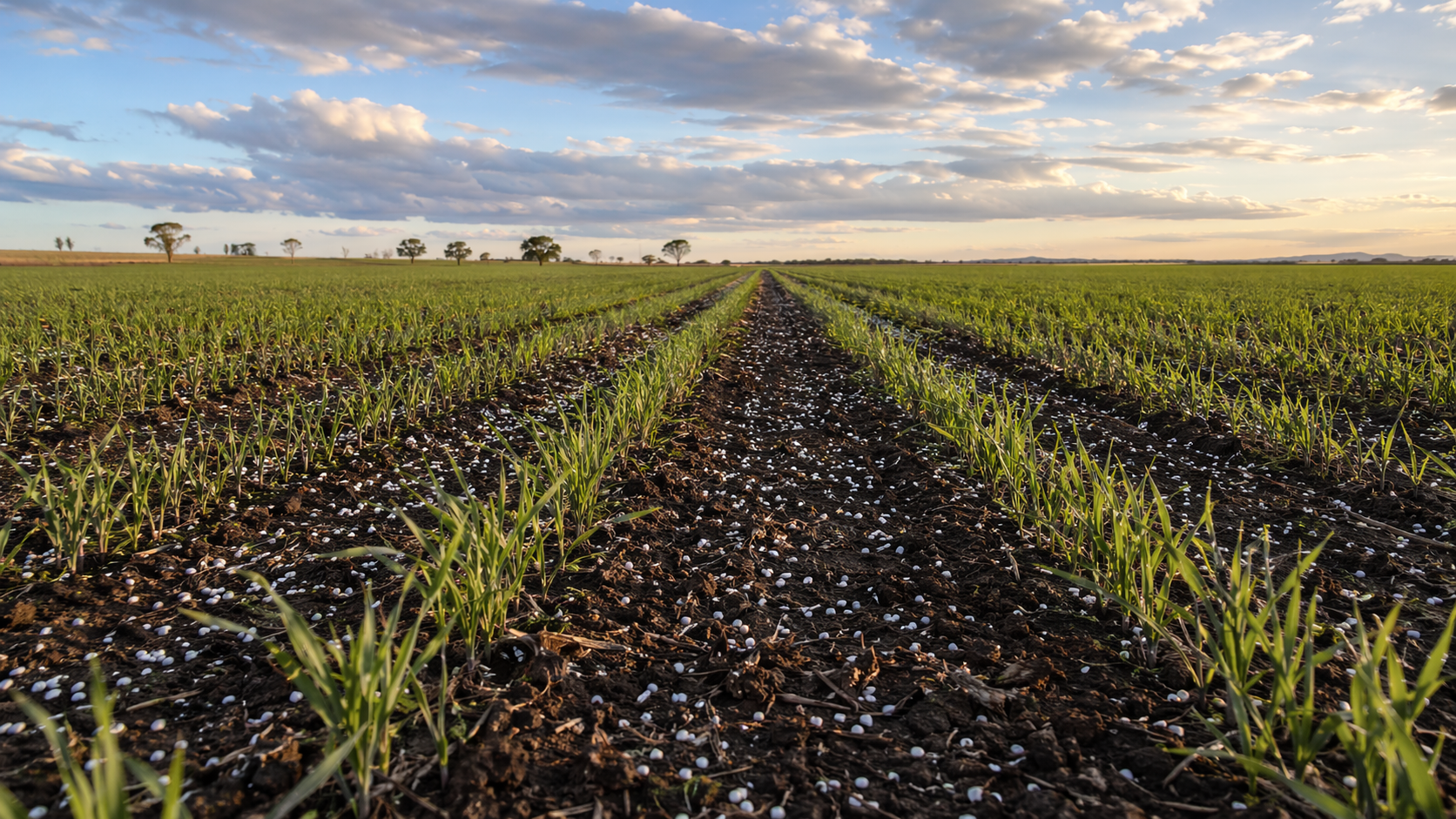
The fertiliser market has been volatile through 2025 and into 2026. The Strait of Hormuz closure earlier this year took several major Middle East producers offline at the same time as Indian plants cut output (Reuters has been covering this in detail[1]). Add China’s ongoing export restrictions on urea[2], and natural gas prices that drive ammonia production cost, and you get a global market where urea is both expensive and not always reliably available when you want it.
For Australian growers the day-to-day price is set in AUD by the Newcastle and Brisbane import landings, but the global story is the story. When the price moves up, every kilogram of nitrogen you apply that the soil already had is money you didn’t need to spend.
Step one: deep soil testing
The cheapest urea you can buy is the urea you don’t have to apply. Before booking the next order, the question to answer is: how much mineral N is already sitting in the profile?
For wheat and oats, sample to 0-60 cm. For sorghum, canola, barley, and cotton, sample to 0-90 cm. Those crops have root systems that draw on residual nitrogen well below the topsoil, so a 0-30 cm test on its own misses what they will actually use. We cover this in detail in our deep soil testing post.
Step two: zone the paddock instead of blanket-rating it
Most paddocks are not uniform. The good country and the worse country don’t need the same nitrogen rate, and applying a single average rate across both wastes input on one zone and underfeeds the other.
Two layers of data make zoning practical:
- NDVI imagery. Multi-year stacked NDVI shows where the paddock has consistently produced and where it has consistently struggled. That gives you the basis for high, medium, and low-yield zones.
- EM survey. Electromagnetic surveys map soil texture and moisture-holding patterns. GRDC’s GroundCover coverage explains how dual-depth EM detects variability down to about 1.5 m[3]. EM tells you why the NDVI looks the way it does.
Combine the two and you can sample each zone separately, build a variable-rate prescription, and apply nitrogen where it will actually return on the input cost.
Step three: rethink the rotation
When urea is expensive for a season or two, the rotation question gets a fresh look. Legume crops (chickpeas, mungbeans, faba beans) fix their own nitrogen and leave residual N for the following cereal. A planned legume break can offset some of what would otherwise be the next year’s urea bill.
Reuters has reported that growers in some regions are also reducing nitrogen-intensive crops like maize and sorghum in response to the price signal[1]. That’s a heavier call and depends on your contracts, your water, and your machinery setup, but it is on the table.
Step four: time the purchase, not just the rate
Urea price is not the same in March as it is in June. Watching the import landings, talking to your reseller about forward contracts, and locking in product when the curve dips are all routine in volatile markets. We are not a fertiliser broker, but we will help you think about the timing in the context of your N budget and planting window.
What this looks like in practice
For most clients we work with, the response to a high urea year is not one big strategic shift. It’s three small disciplines done well: deep soil test before the order goes in, apply variable-rate to zones rather than a blanket rate, and choose the rotation with the next season’s nitrogen position in mind.
If you want a paddock-specific conversation, get in touch through the contact page.